
HVAC - PVVAL Tech
Where Innovation meets Efficiency
By Froid - Patented
PVVAL Tech; The Efficiency you were missing for your HVAC Units.
Provide a short summary of your recent projects, highlighting the most important things.
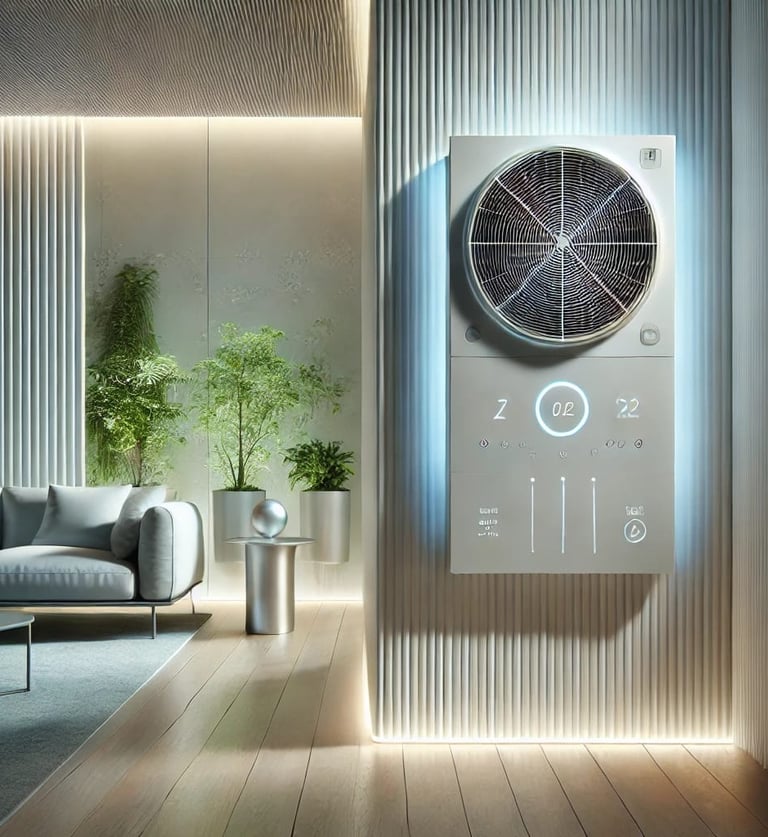
PVVAL Technology
PVVAL Technology represents a new frontier in intelligent energy optimization—designed for a future where efficiency is no longer optional, but embedded into every system.
At its core, PVVAL is built around the idea that energy systems should adapt dynamically to real-world conditions rather than operate at fixed, wasteful baselines. It introduces a layer of smart control and environmental responsiveness that continuously aligns energy usage with actual demand, eliminating unnecessary consumption without compromising performance.
In modern applications—whether in cooling systems, industrial processes, or commercial infrastructure—significant energy losses occur due to overdesign, static operation, and delayed response to changing conditions. PVVAL addresses this gap by enabling systems to operate with precision, stability, and intelligence, ensuring that only the required amount of energy is used at any given moment.
The result is a substantial reduction in power consumption, improved system lifespan, and a lower environmental footprint. More importantly, PVVAL positions itself as a foundational technology for next-generation energy ecosystems—where automation, sustainability, and efficiency converge seamlessly.
In a world moving toward smarter cities and greener industries, PVVAL is not just an upgrade—it is a shift toward how energy should be managed.
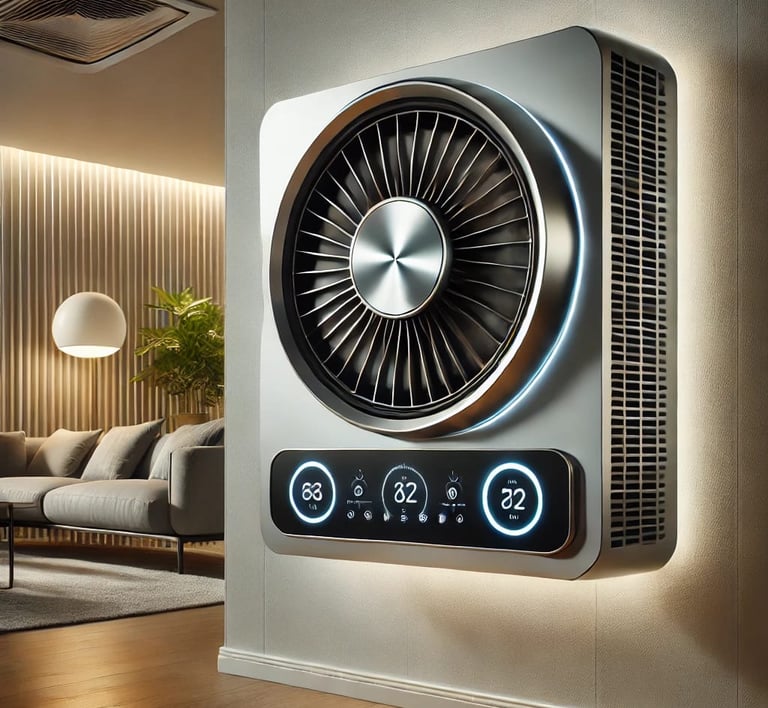
The Future Air Conditioning
The future of air conditioning is not just about making spaces colder—it’s about making cooling intelligent, adaptive, and energy-aware.
Traditional AC systems, like those based on Vapor Compression Refrigeration, were designed decades ago. They rely on fixed cycles compress, condense, expand, evaporate running continuously whether the full cooling capacity is needed or not. This creates massive energy inefficiencies, especially in today’s dynamic environments.
The Shift: From Cooling Machines to Smart Climate Systems
The next generation of AC is evolving in three major directions:
1. Adaptive & Demand-Driven Cooling
Future systems will no longer operate at constant loads. Instead, they will:
Sense occupancy, heat load, humidity, and air quality in real time
Adjust cooling output dynamically
Operate only when and where needed
This moves beyond inverter technology into fully responsive systems that behave almost like living organisms—constantly self-adjusting.
2. Energy Optimization at the Core
Cooling currently accounts for a huge portion of global electricity use. The future focuses on:
Minimizing compressor dependency
Reducing pressure and thermal losses
Recovering and reusing wasted energy
Technologies like PVVAL are aligned with this future introducing intelligent control layers that reduce unnecessary energy draw without altering user comfort.
3. Integration with Smart Ecosystems
Future AC systems will not operate in isolation:
Connected to smart grids
Integrated with building management systems (BMS)
Powered partly by renewables (solar, storage systems)
AI-driven predictive maintenance and performance optimization
4. Human-Centric Comfort
Cooling will shift from “temperature control” to “comfort engineering”:
Personalized cooling zones
Air quality + humidity + airflow optimization
Silent, seamless operation